
 Italiano
 English
 Deutsch
 Français
 Español
 Português
 Dutch
Dutch
 Danish
 Norwegian
 Swedish
 Finnish
 Czech
Czech
 Hungarian
 Latvian
 Lithuanian
 Polish
 Romanian
 Slovak
- -32%

Email: store@creasol.it - Telegram: CreasolTech - Whatsapp: +393283730010

Courrier prioritaire : rapide et pas cher - C

Contactez-nous avant de retourner les produits !
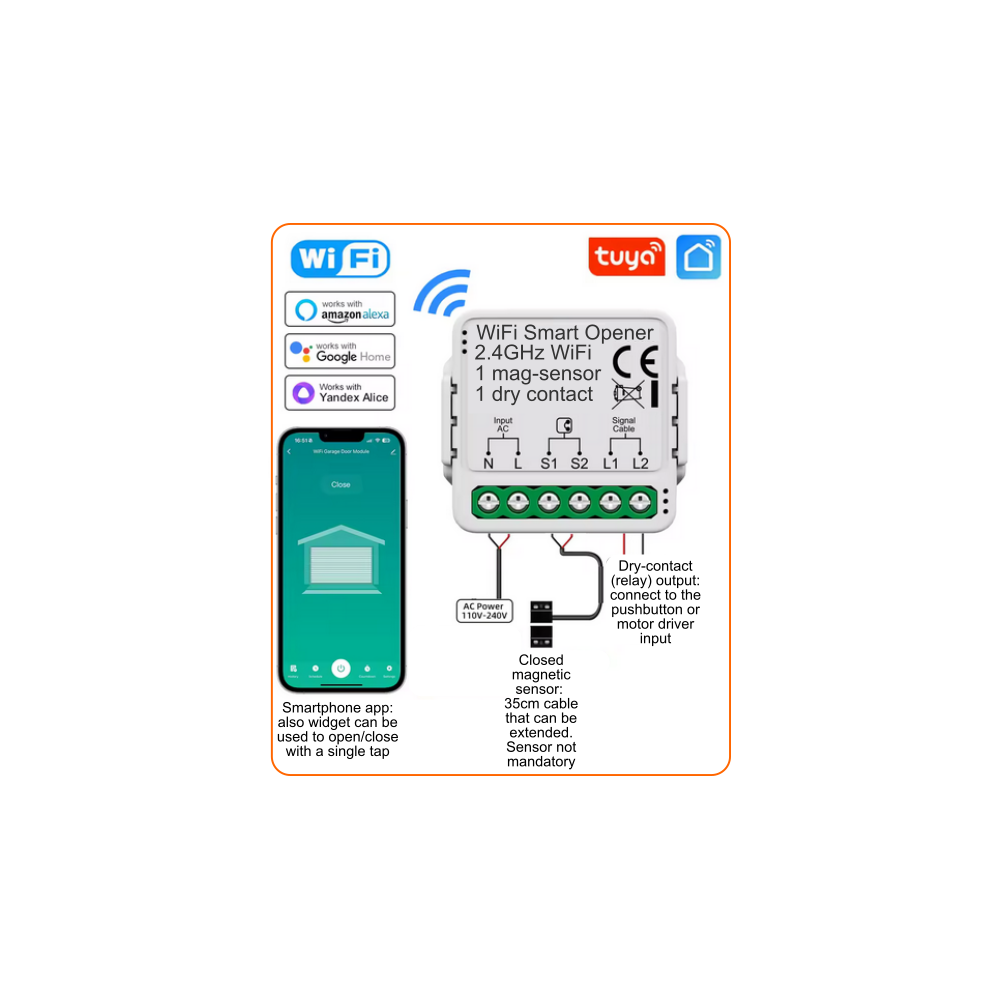
Ouvre-porte intelligent WiFi 2,4 GHz permettant d'ouvrir et de fermer votre porte de garage, votre portail ou votre barrière de circulation via smartphone, Android Auto, Google Home et Alexa.
Support complet : la plupart des produits sont conçus par nos soins !
Email: store@creasol.it - Telegram: CreasolTech - Whatsapp: +393283730010
Les commandes sont expédiées sous 1 jour ouvrable
Courrier prioritaire : rapide et pas cher - C
Garantie 24 mois, retour/remboursement facile
Contactez-nous avant de retourner les produits !
 Dispositif WiFi très compact, 39x39x23mm, équipé d'un capteur magnétique pour surveiller l'état fermé et d'un contact sec (relais) activé pendant 0,5s pour ouvrir/fermer votre porte de garage, votre portail ou votre barrière de circulation (désormais appelée « automatisation »).
Le dispositif d'ouverture intelligent doit être connecté au réseau WiFi domestique : le smartphone peut alors ouvrir/fermer l'automatisation à la fois via le réseau WiFi interne et via l'accès Internet (cloud) : il est ainsi possible de gérer l'automatisation à distance, en dehors de la zone de couverture WiFi./p>
Pas de frais liés au cloud, pas de frais annuels.
Soyez prudent avec l'électricité. Toutes les interventions doivent être effectuées par des techniciens !
Désormais, l'automatisation peut être contrôlée par smartphone et par les systèmes domotiques.
Sur l'application SmartLife, créez une scène pour ouvrir l'automatisation (portail, porte de garage ou barrière de circulation).

Une fois le smartphone connecté au véhicule, il est possible d'appuyer sur l'icône Applications -> SmartLife -> Scènepour ouvrir l'automatisation.
Bien sûr, il est possible d'installer davantage de systèmes d'ouverture intelligents pour actionner différents dispositifs automatisés, par exemple la porte de garage de votre maison, la barrière de circulation au travail, etc.
Utilisation du plugin https://github.com/lacha07/domoticz-tuya-cloud Il est possible de s'inscrire au cloud Tuya, d'accéder à l'ouvre-porte intelligent afin qu'il puisse être piloté par Domoticz via le navigateur (sur PC ou smartphone) et l'application.
Suivez les instructions du lien ci-dessus pour vous inscrire à l'API Tuya.
Installez l'intégration Tuya, inscrivez-vous au cloud Tuya pour obtenir une clé API, puis vous pourrez accéder aux ouvre-portes intelligents depuis Home Assistant.
Non, il est possible d'éviter l'installation du capteur magnétique : dans ce cas, il faut désactiver les notifications relatives à l'état ouvert dans l'application SmartLife/Tuya, afin d'éviter les avertissements concernant l'état ouvert du système domotique.
Oui, il a un plastique support pour fixation sur un rail DIN, occupant 2,5 modules (43 mm).
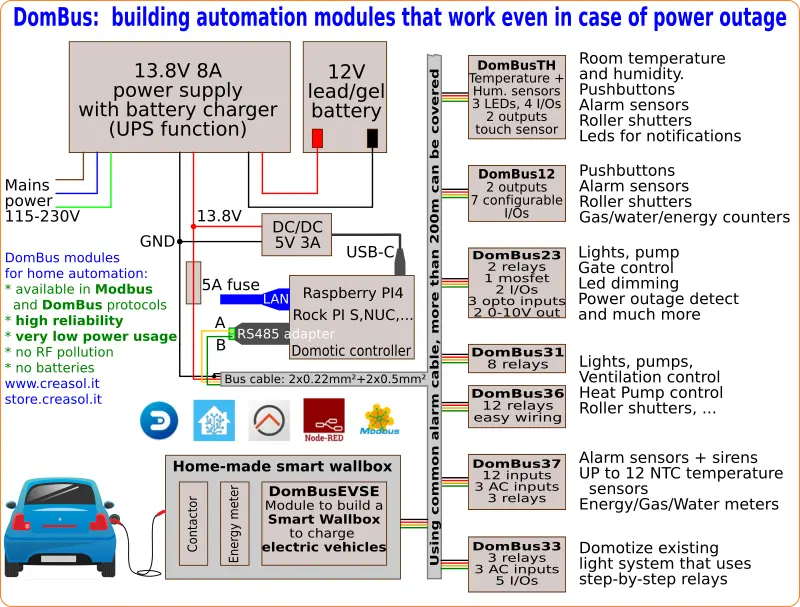
The following video shows a presentation of some domotic modules designed and produced in Italy by Creasol to make a reliable, easy and power-optimized home automation system.
The next video shows our Smart EVSE module that can be used to charge the electric car by using only solar power, or adding 25/50/75/100% of available power from the electrical grid.
Our industrial and home automation modules are designed to be
Modules are available in two version:
Store website - Information website
For our products we can offer FULL SUPPORT and CUSTOMIZATION: please contact us by Email or Telegram
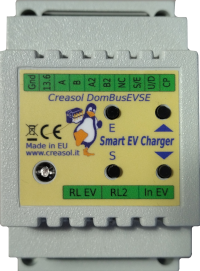 Complete solution to make a Smart EVSE, charging the electric vehicle using only energy from renewable source (photovoltaic, wind, ...), or adding 25-50-75-100% of available power from the grid.
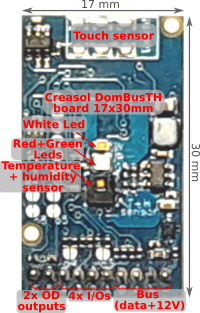 Compact board, 32x17mm, to be installed on blank cover with a 4mm hole in the middle, to exchange air for the relative humidity sensor. It can be installed in every room to monitor temperature and humidity, check alarm sensors, control blind motor UP/DOWN, send notifications (using red and green leds) and activate white led in case of power outage.
Includes:
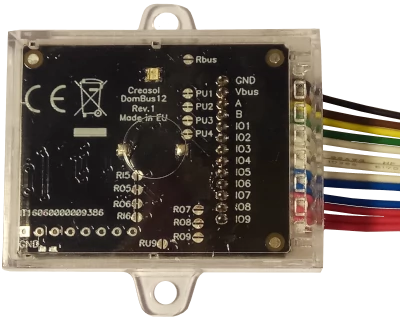 Very compact, versatile and cost-effective module with 9 ports. Each port can be configured by software as:
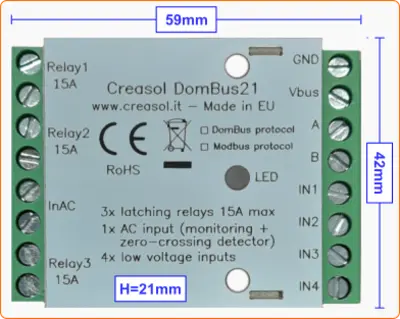 Very low power consumption module designed to enable up to 3 high power loads, up to 15A (3kW).
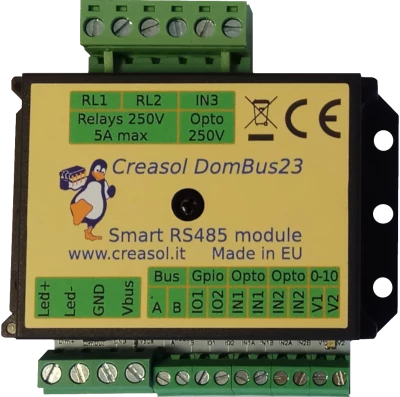 Versatile module designed to control gate or garage door.
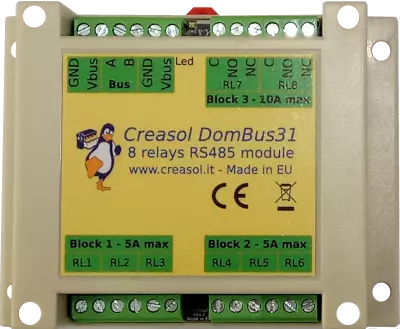 DIN rail low profile module, with 8 relays and very low power consumption:
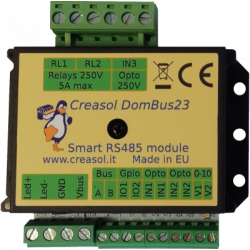
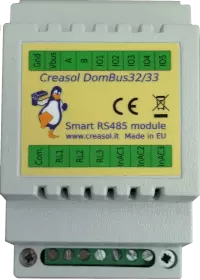 Versatile module with 230V inputs and outputs, and 5 low voltage I/Os.
Module designed to control 3 lights already existing and actually controlled by 230V pushbuttons and step-by-step relays. In this way each light can be activated by existing pushbuttons, and by the domotic controller.
Each relay can toggle the existing step-relay, switching the light On/Off. The optoisolator monitors the light status. The 5 I/Os can be connected to pushbuttons to activate or deactivate one or all lights.
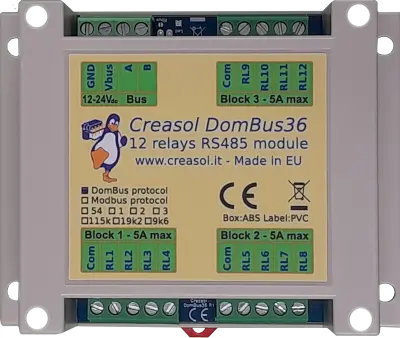 DIN rail module, low profile, with 12 relays outputs and very low power consumption.
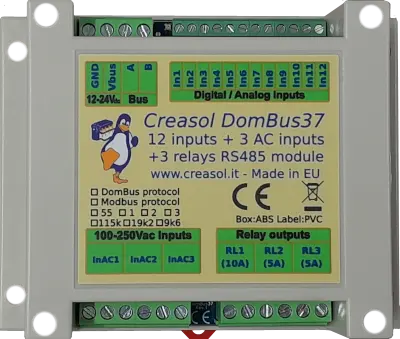 Module designed to be connected to alarm sensors (magnetc contact sensors, PIRs, tampers): it's able to monitor mains power supply (power outage / blackout) and also have 3 relays outputs.
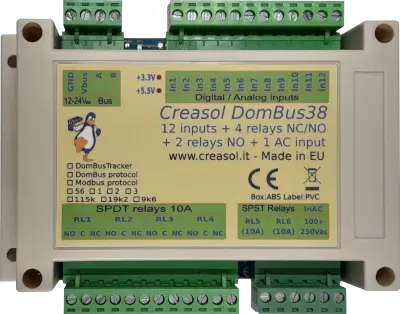 DIN rail module designed for burglar alarm system.
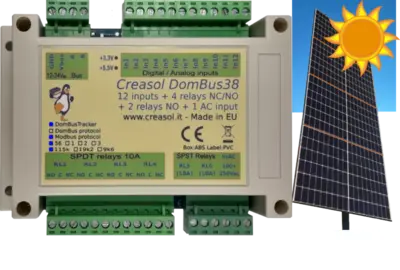 DIN rail module that control azimuth + elevation/tilt motors of a sun tracker, to maximize photovoltaic energy production during the day and seasons.
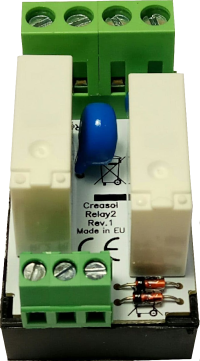 Simple module with 2 relays, to be used with DomBus modules or other electronic boards with open-collector or open-drain outputs
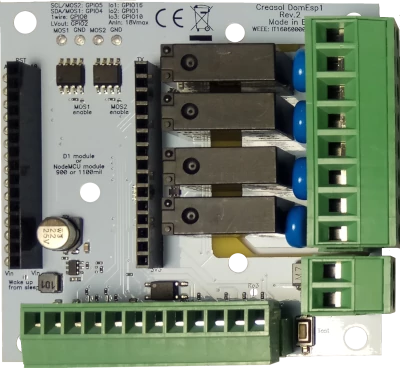 IoT board designed for NodeMCU v3 board using ESP8266 WiFi microcontroller
Deze garagedeur of poort opener werkt perfect en het aansluiten is een fluitje van een cent. Ik ga er binnenkort waarschijnlijk nog een bestellen!
Ouvre-porte intelligent WiFi 2,4 GHz permettant d'ouvrir et de fermer votre porte de garage, votre portail ou votre barrière de circulation via smartphone, Android Auto, Google Home et Alexa.