
 Italiano
 English
 Deutsch
 Français
 Español
 Português
 Dutch
Dutch
 Danish
 Norwegian
 Swedish
 Finnish
 Czech
Czech
 Hungarian
 Latvian
 Lithuanian
 Polish
 Romanian
 Slovak

Email: store@creasol.it - Telegram: CreasolTech - Whatsapp: +393283730010

Priority Mail: schnell und günstig – Exp

Kontaktieren Sie uns, bevor Sie Produkte zur
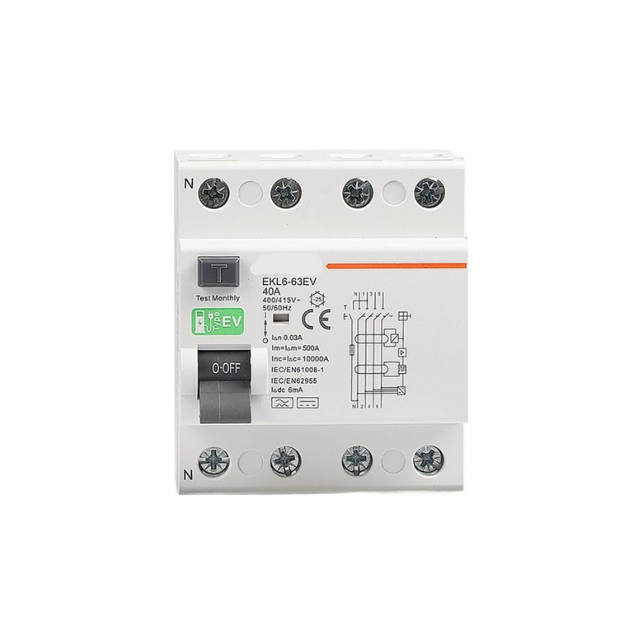
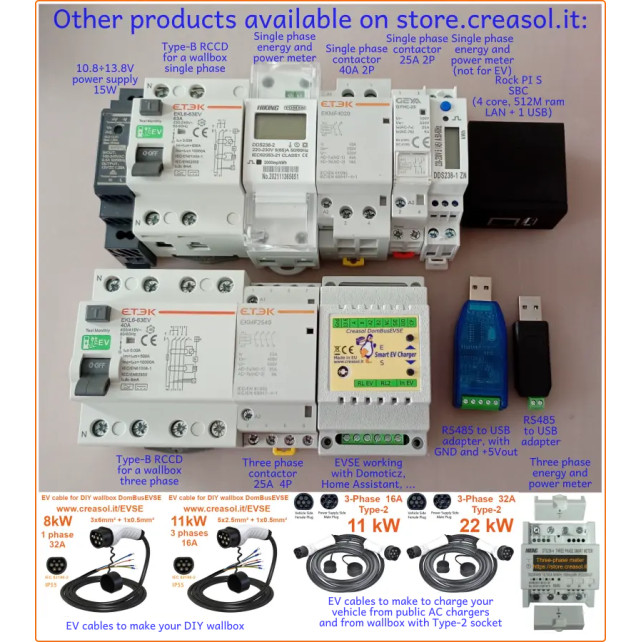
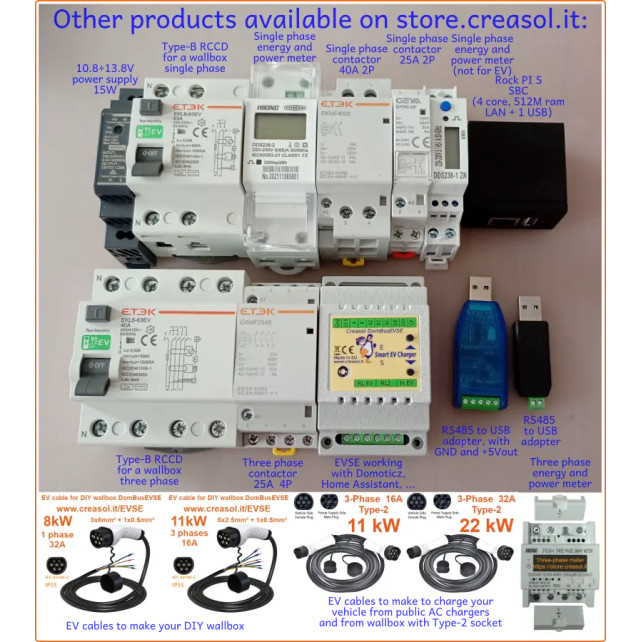
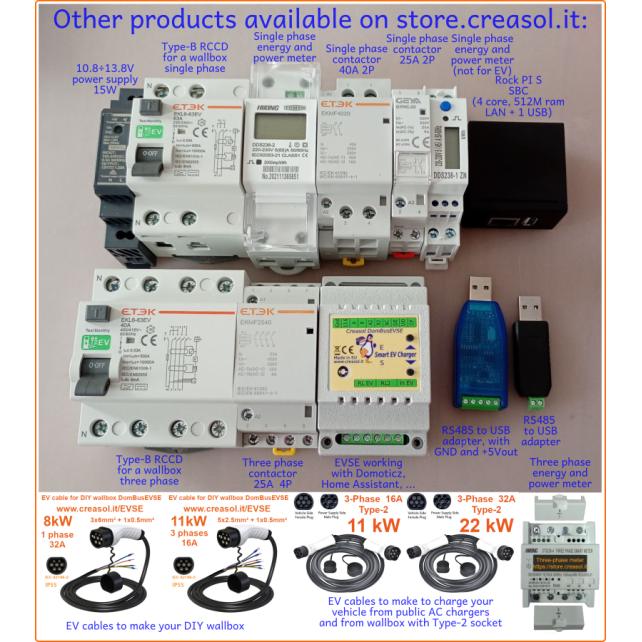
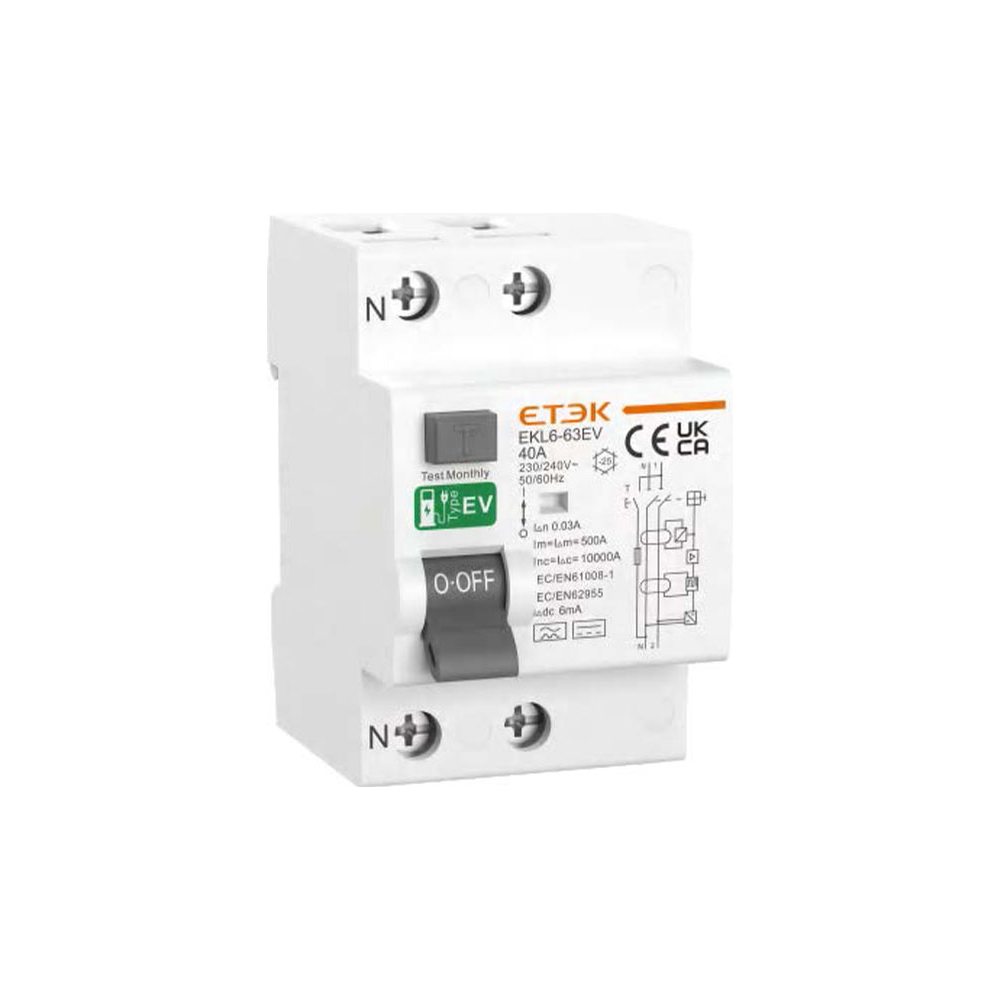
Fehlerstromschutzschalter (RCCB) Typ A + EV, 40A oder 63A für Ladestationen und Wallboxen für Elektrofahrzeuge, einphasig, mit Schutzstrom 30mA AC und 6mA DC.
Volle Unterstützung: Die meisten Produkte werden von uns entworfen!
Email: store@creasol.it - Telegram: CreasolTech - Whatsapp: +393283730010
Bestellungen werden innerhalb eines Werktages versandt
Priority Mail: schnell und günstig – Exp
24 Monate Garantie, einfache Rückgabe/Rückerstattung
Kontaktieren Sie uns, bevor Sie Produkte zur
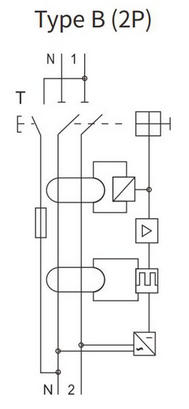 Fehlerstromschutzschalter (RCCB) Typ A + Typ EV, 240 V 40 A oder 63 A für Einphasen-Ladestationen und Wallboxen für ElektrofahrzeugeMit einem Schutzstrom von 30 mA AC und 6 mA DC. Entspricht IEC/EN61008-1 und IEC/EN62423.
Nützlich zum Schutz von mobilen Ladestationen und selbstgebauten Wallboxen mithilfe des DomBusEVSE-Moduls.
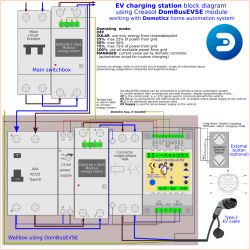
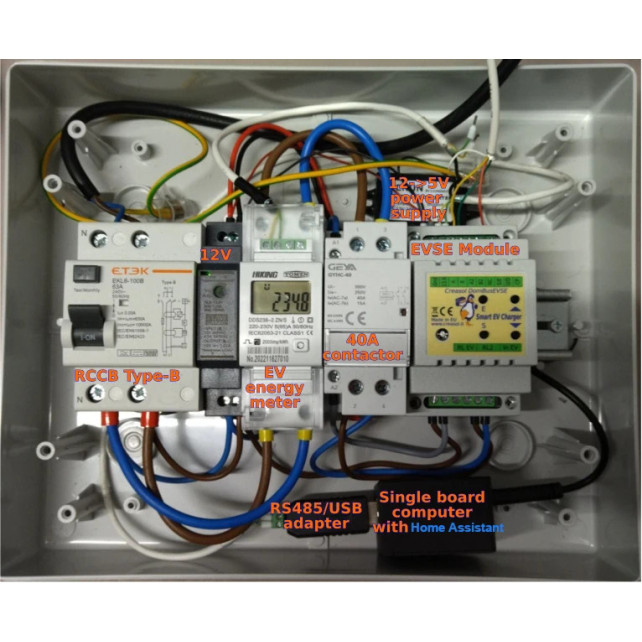
Es kann verwendet werden, um Bau einer selbstgebauten Ladestation für Elektrofahrzeuge (Ladestation, Wallbox), unter Verwendung
* dieser RCD - RCCB als Schutz
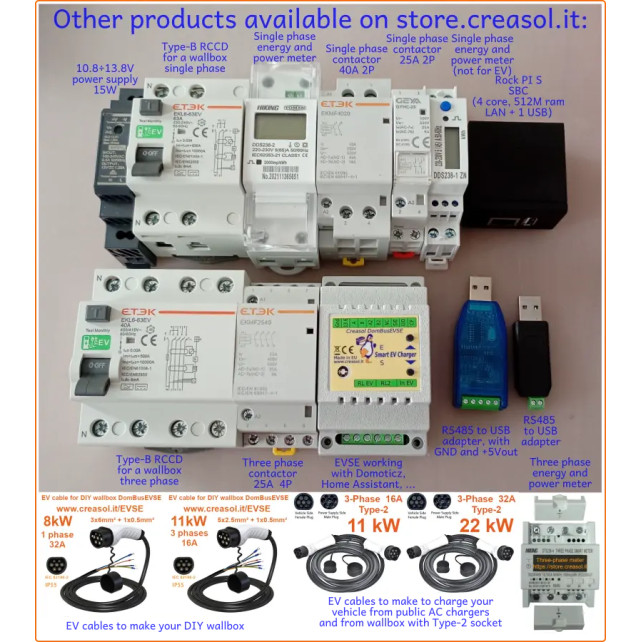
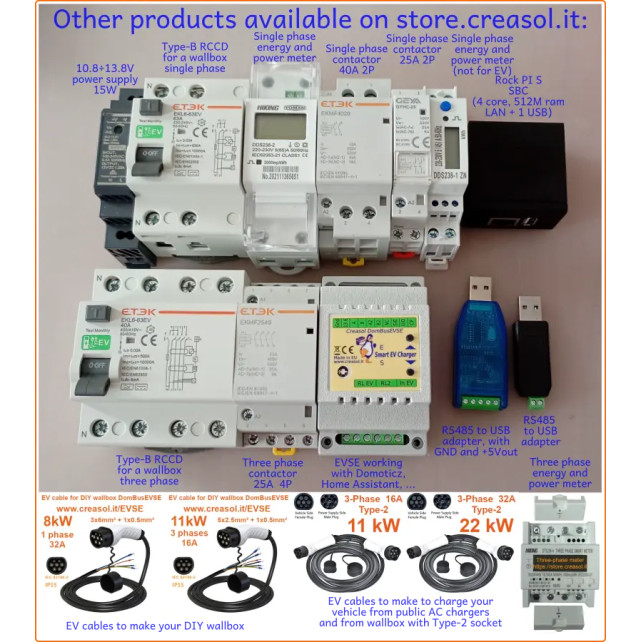
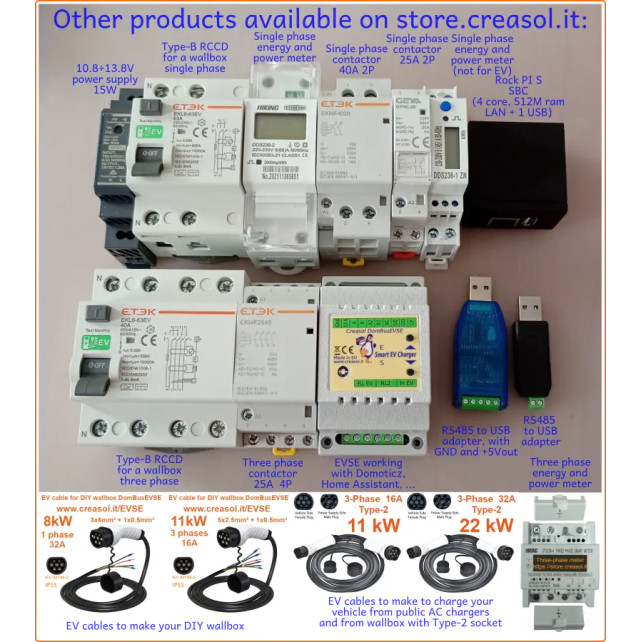
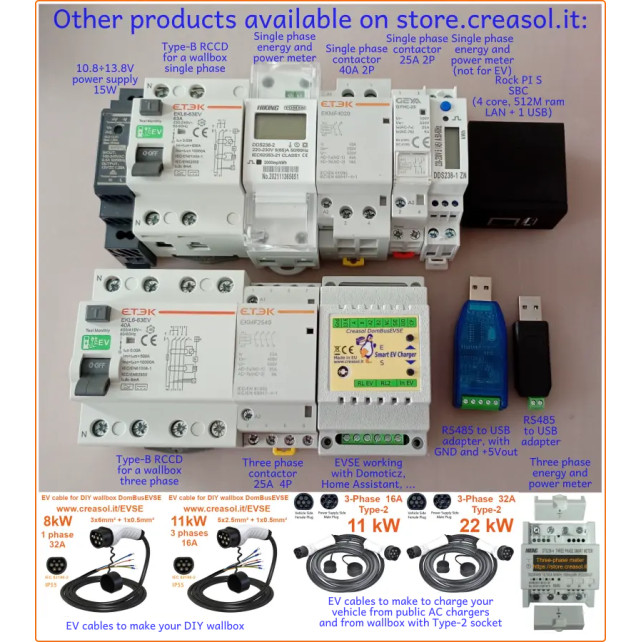
* 40A 2P Schütz (erhältlich auf dieser Website)
* Creasol DomBusEVSE als Ladeeinrichtung für Elektrofahrzeuge (zur Steuerung der Ladeleistung/des Ladestroms) (verfügbar auf dieser Website)
* ein Typ-2- oder Typ-1-Kabel und eine kleine Anschlussdose
* ein Energiezähler (bidirektionaler Typ, wenn Photovoltaik oder andere erneuerbare Energiequellen genutzt werden) zur Messung der verfügbaren Leistung aus dem Netz (verfügbar auf dieser Website; nicht erforderlich, wenn bereits vorhanden und von einem Hausautomationssystem verwaltet wird; in diesem Fall kann eine einfache Automatisierung verwendet werden, um das DomBusEVSE-Modul über die aus dem Netz bezogene Leistung zu informieren)
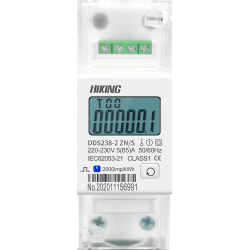
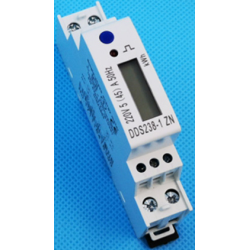
* optional ein Energiezähler DDS-238 ZN/s zur Messung des EnergieverbrauchsFahrzeugbatterie auffüllen (erhältlich auf dieser Website)
* Eine DIN-Schienenbox, idealerweise im Innenbereich aufzustellen.
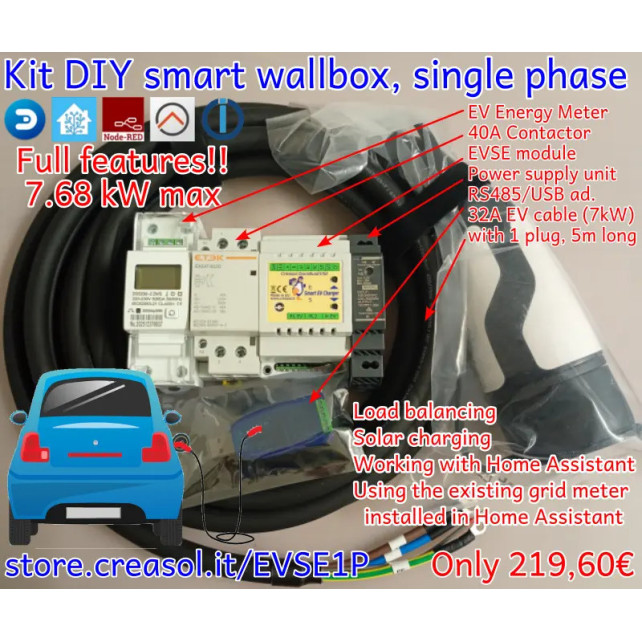
Verwendung Creasol DomBusEVSE DIN-Schienenmodul Es ist möglich, ein voll ausgestattete Ladestation für Elektrofahrzeuge mit folgenden Merkmalen:
* Die Wanddose kann sein Überwachung und Steuerung erfolgen über Smartphone und Webbrowser.
* Vollständige Integration mit Hausautomationssystemen wie Domoticz, Home Assistant, Node-RED, OpenHAB, ioBroker und anderen Systemen, die MQTT oder Modbus unterstützen.
* Intelligenter Lastausgleich
* verwenden Sie die Die volle Leistung, die Ihr Lieferant bietetIn Italien ist es beispielsweise möglich, die vertraglich vereinbarte Leistung + 27 % für maximal 90 Minuten zu nutzen, danach muss die Leistung für mindestens 90 Minuten auf die vertraglich vereinbarte Leistung + 10 % reduziert werden, bevor sie wieder auf die vertraglich vereinbarte Leistung + 27 % erhöht werden kann usw.
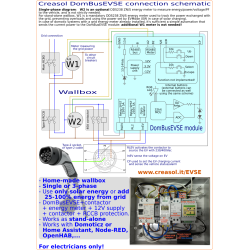
Mehr Infos unter https://www.creasol.it/EVSE
Derartige Installationen sollten von einem Elektrotechniker mit umfassenden Kenntnissen über Elektrizität und thermische Risiken durchgeführt werden, der geeignete Kabel und Verbindungen verwendet, um Brände, Kurzschlüsse, Stromschläge usw. zu verhindern.
Merkmale des Fehlerstromschutzschalters:
● Normen: IEC61008-1, IEC61008-2, IEC62955r />● Klassifizierung von RDC-DD: RDC-PD />● Verhalten in Gegenwart von Gleichstromkomponenten: Typ A />● Nennstrom: 16~63A
● Nennspannung: 230/400 V ~ 240/415 Vr />● Pole: 2P(1P+N), 4P(3P+N), N Pol links
● Bemessungsreststrom (IΔn): 30 mA />● Bemessungs-Gleichstrom-Restbetriebsstrom (IΔdc): 6 mA />● Umgebungslufttemperatur: -25...+55 °C />● Verbindung: Von oben und unten>● Zertifikate: CE, CB, TÜV, UKCA
● Anwendungsbereiche: Ladestation für Elektrofahrzeuge
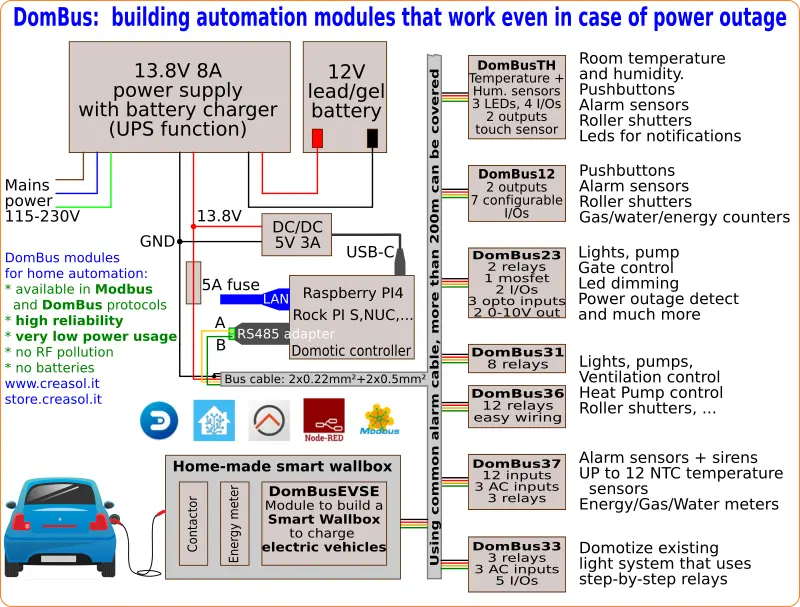
The following video shows a presentation of some domotic modules designed and produced in Italy by Creasol to make a reliable, easy and power-optimized home automation system.
The next video shows our Smart EVSE module that can be used to charge the electric car by using only solar power, or adding 25/50/75/100% of available power from the electrical grid.
Our industrial and home automation modules are designed to be
Modules are available in two version:
Store website - Information website
For our products we can offer FULL SUPPORT and CUSTOMIZATION: please contact us by Email or Telegram
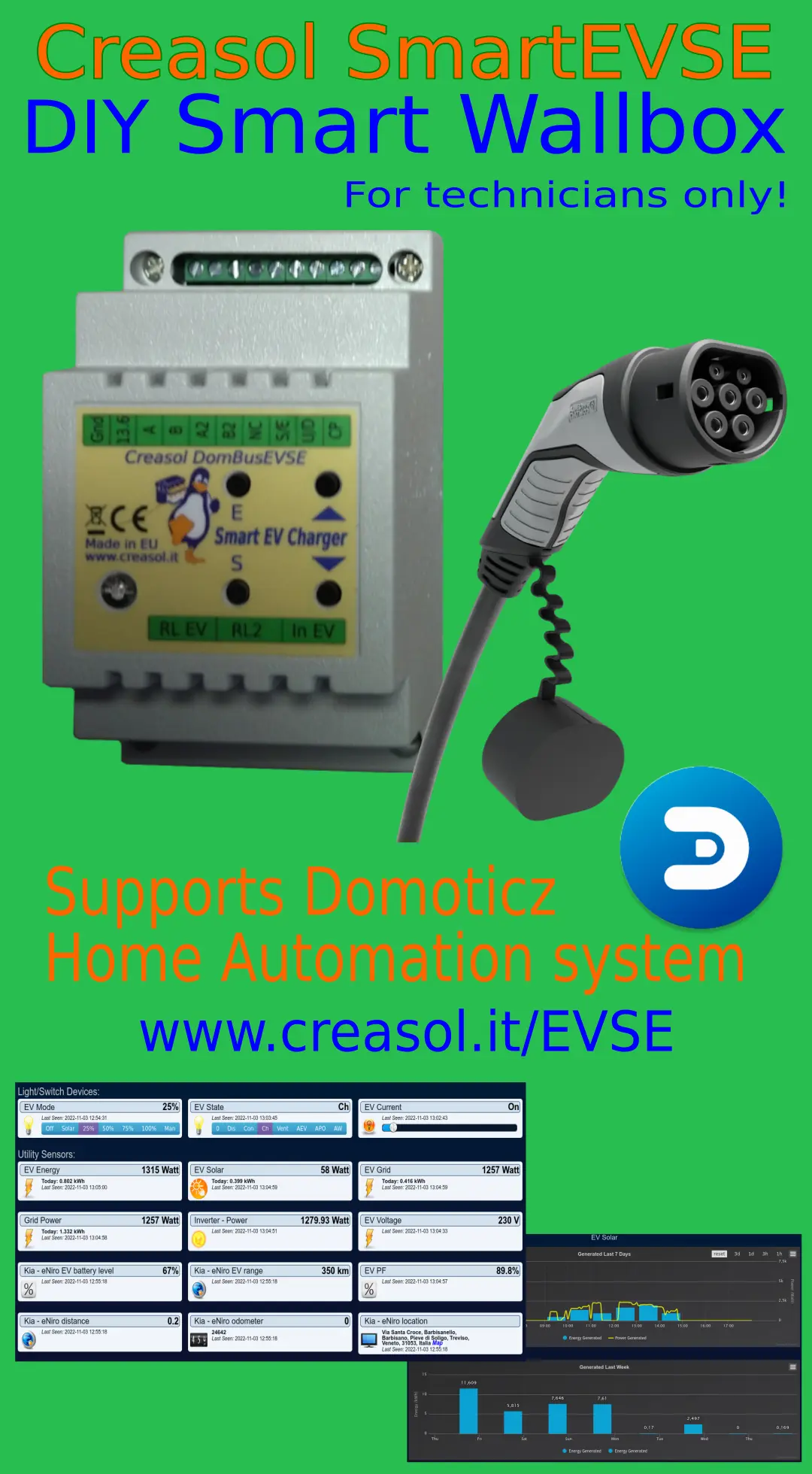
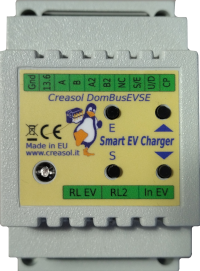 Complete solution to make a Smart EVSE, charging the electric vehicle using only energy from renewable source (photovoltaic, wind, ...), or adding 25-50-75-100% of available power from the grid.
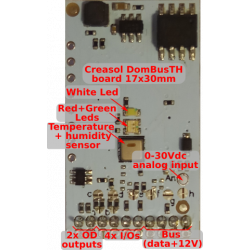
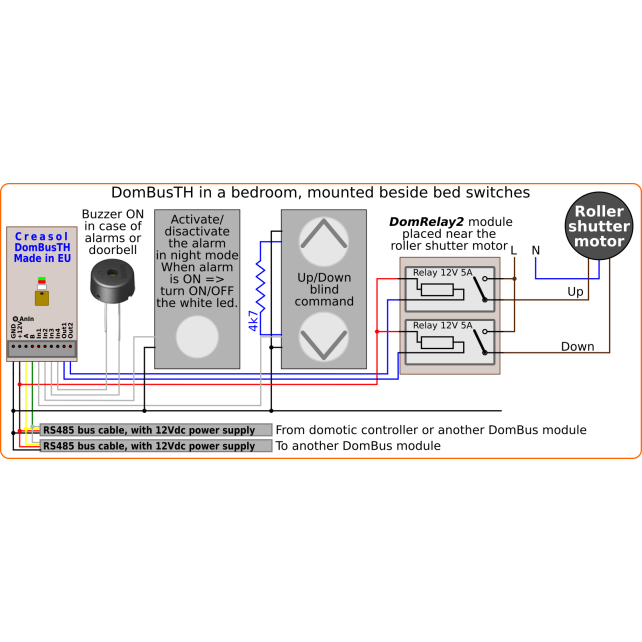
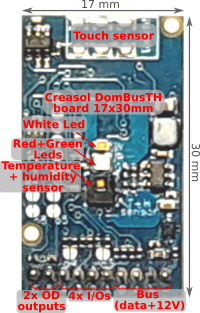 Compact board, 32x17mm, to be installed on blank cover with a 4mm hole in the middle, to exchange air for the relative humidity sensor. It can be installed in every room to monitor temperature and humidity, check alarm sensors, control blind motor UP/DOWN, send notifications (using red and green leds) and activate white led in case of power outage.
Includes:
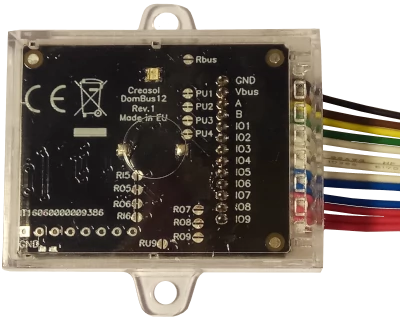 Very compact, versatile and cost-effective module with 9 ports. Each port can be configured by software as:
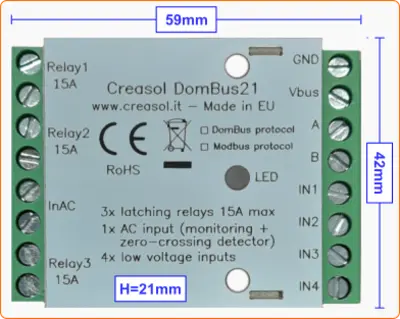 Very low power consumption module designed to enable up to 3 high power loads, up to 15A (3kW).
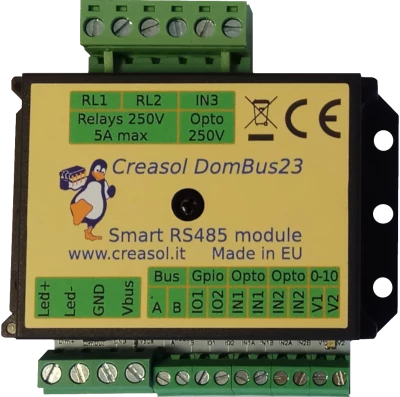 Versatile module designed to control gate or garage door.
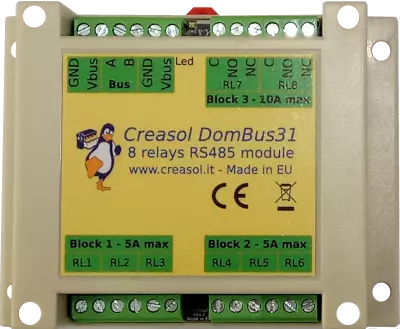 DIN rail low profile module, with 8 relays and very low power consumption:
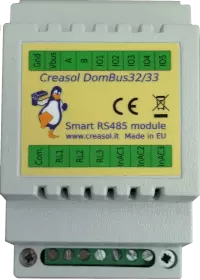 Versatile module with 230V inputs and outputs, and 5 low voltage I/Os.
Module designed to control 3 lights already existing and actually controlled by 230V pushbuttons and step-by-step relays. In this way each light can be activated by existing pushbuttons, and by the domotic controller.
Each relay can toggle the existing step-relay, switching the light On/Off. The optoisolator monitors the light status. The 5 I/Os can be connected to pushbuttons to activate or deactivate one or all lights.
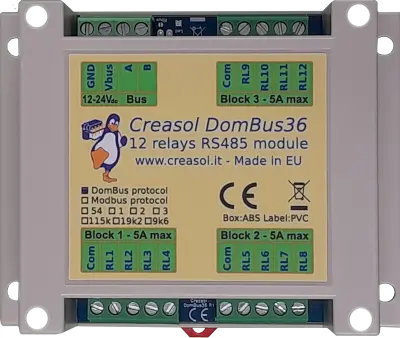 DIN rail module, low profile, with 12 relays outputs and very low power consumption.
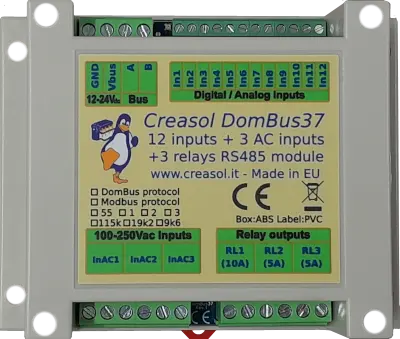 Module designed to be connected to alarm sensors (magnetc contact sensors, PIRs, tampers): it's able to monitor mains power supply (power outage / blackout) and also have 3 relays outputs.
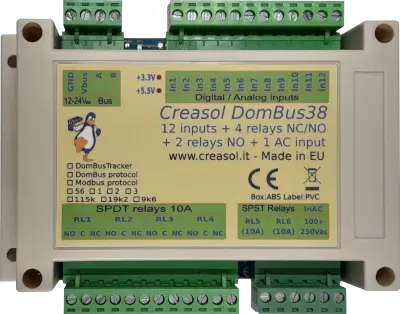 DIN rail module designed for burglar alarm system.
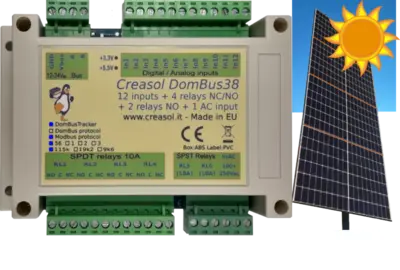 DIN rail module that control azimuth + elevation/tilt motors of a sun tracker, to maximize photovoltaic energy production during the day and seasons.
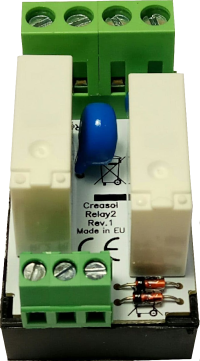 Simple module with 2 relays, to be used with DomBus modules or other electronic boards with open-collector or open-drain outputs
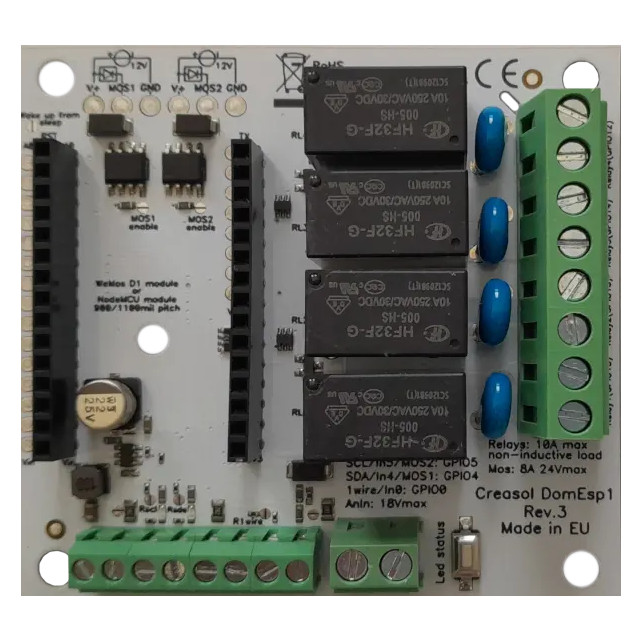
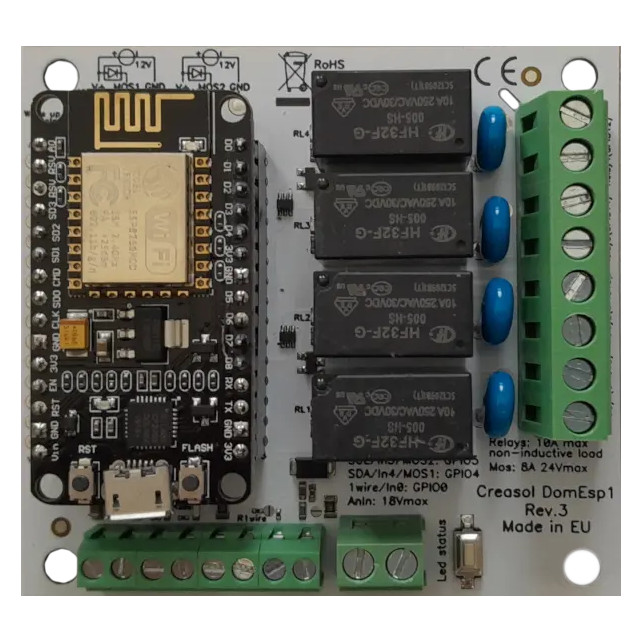
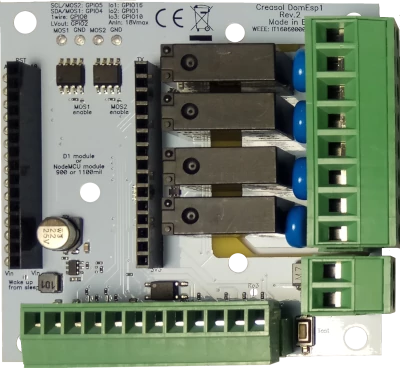 IoT board designed for NodeMCU v3 board using ESP8266 WiFi microcontroller
Works ok, I installed on a previous home installation and it trigers.
It must be installed on a exclusive circuit for EV.
Fehlerstromschutzschalter (RCCB) Typ A + EV, 40A oder 63A für Ladestationen und Wallboxen für Elektrofahrzeuge, einphasig, mit Schutzstrom 30mA AC und 6mA DC.